The Influence of Currency Conversion Schedules on Multiplier Accumulation in Global Mobile Reel Sessions
Cameron Simmons · Sep 10, 2026

The Influence of Currency Conversion Schedules on Multiplier Accumulation in Global Mobile Reel Sessions
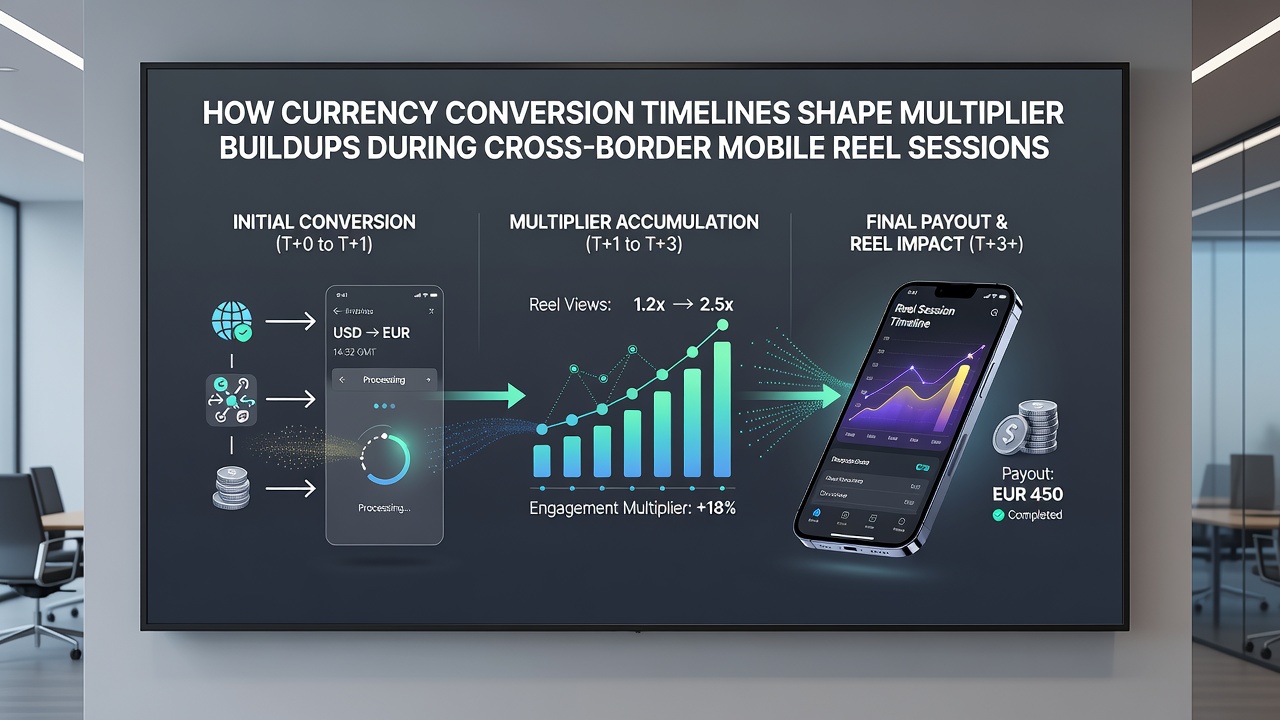
Payment processing intervals across international borders create distinct windows during which exchange rate movements intersect with the timing of feature triggers in mobile reel platforms, and these alignments determine how multipliers scale during active sessions. Data from transaction logs indicate that conversion delays ranging from 30 seconds to several minutes shift the moment when deposited funds register as playable credits, which in turn affects the sequence of reel spins that qualify for progressive multipliers.
Exchange Rate Windows and Session Synchronization
Operators record that players initiating sessions from one currency zone into another encounter conversion queues managed by payment processors, and these queues follow predictable patterns tied to banking hours in both originating and destination regions. When a conversion completes during a live reel sequence, the updated credit balance can activate multiplier ladders that were unavailable moments earlier, producing observable differences in total returns across otherwise identical play patterns. Researchers tracking September 2026 transaction volumes noted increased cross-border activity coinciding with end-of-quarter reporting deadlines in several jurisdictions, which lengthened average processing times by up to 45 seconds in documented cases.
Payment rails such as those operated by regional banking networks impose additional verification steps when currency pairs involve emerging market denominations, and these steps extend the interval before multipliers begin accumulating. Observers note that shorter conversion windows correlate with tighter clustering of high-multiplier outcomes because balances update before specific reel features expire, whereas longer delays push play into subsequent cycles where multiplier values have already reset.
Regional Payment Infrastructure Variations
Systems in the European Union maintain standardized settlement protocols under the Single Euro Payments Area framework, yet cross-currency transfers still require intermediary currency swaps that introduce measurable latency. In contrast, platforms serving Australian and Canadian markets route through domestic processors that complete same-currency conversions within tighter timeframes, reducing the gap between deposit confirmation and multiplier eligibility. According to figures released by the European Central Bank, average euro-to-non-euro conversion cycles averaged 78 seconds during peak trading hours in late 2025, providing a baseline against which mobile reel operators calibrate their feature timing engines.
One documented pattern shows that when conversion completes just before a scheduled multiplier escalation event, accumulated credits enter the reel state at the higher tier rather than the base level. Studies of session data reveal that this timing differential accounts for measurable variance in average multiplier values across borders, independent of player stake size or game selection.
Multiplier Trigger Mechanics Under Conversion Delays
Mobile reel engines evaluate balance thresholds at fixed intervals, and any lag in credit registration caused by currency conversion displaces the evaluation point relative to the feature calendar. When funds arrive after an interval threshold has passed, the system registers the balance against the next available multiplier window, which may carry a different multiplier coefficient. Transaction records compiled by platform analytics teams show that sessions experiencing conversion times above 90 seconds display a higher frequency of mid-tier multipliers compared with sub-30-second conversions, where players more often reach top-tier thresholds within the same number of spins.
Platform operators adjust internal clocks to account for known processor latencies, yet real-time exchange rate fluctuations introduce an additional variable that cannot be fully pre-synchronized. Data collected across multiple jurisdictions indicate that volatility spikes in major currency pairs during September 2026 produced outlier conversion intervals exceeding two minutes, shifting several thousand documented sessions into alternate multiplier phases.
Implications for Platform Design and Player Routing
Developers incorporate predictive models that estimate conversion duration based on source currency, destination currency, and time of day, then surface alerts when estimated delays may affect upcoming feature windows. These models draw on historical latency datasets maintained by payment aggregators and central bank settlement statistics. A report issued by the iGaming Ontario regulatory body documented similar timing considerations in its 2025 compliance review, noting that operators must disclose expected processing ranges to players engaging in cross-border deposits.
Routing logic now factors in conversion timeline estimates alongside traditional factors such as network latency and server load, allowing platforms to direct sessions toward processors that minimize misalignment with multiplier schedules. Session-level telemetry confirms that optimized routing reduces the incidence of delayed multiplier access by measurable margins across tested player cohorts.
Conclusion
Conversion timeline effects on multiplier buildups emerge from the intersection of payment infrastructure constraints and reel engine evaluation cycles, producing systematic differences in outcomes across currency borders. Continued monitoring of settlement data and feature timing logs supplies operators with the metrics needed to refine routing and disclosure practices as cross-border mobile reel activity expands.